
Why Your Bones Deserve More Attention Than You Think
Why Your Bones Deserve More Attention Than You Think
By Dr. Cheryl Koelling
Most women spend years investing in their skin, their hair, and their overall appearance.
Very few spend time thinking about their bones.
And yet, your bones are what allow you to stand tall, move freely, and carry your life forward every single day. They are the foundation of your strength, your posture, and your independence. They are also one of the most overlooked aspects of women’s health.
Bone is not static. It is living, dynamic tissue that is constantly breaking down and rebuilding in a process known as remodeling. In early adulthood, this process is balanced. But as women move into their mid-thirties and beyond, that balance begins to shift.
Hormonal changes, particularly those associated with perimenopause and menopause, accelerate bone loss. In fact, women can lose a significant percentage of their bone density inthe years surrounding menopause, often without any noticeable symptoms.
That is what makes bone health uniquely challenging.
There is no clear warning sign. No immediate discomfort. No signal that prompts action until, in many cases, a fracture or diagnosis forces the conversation.
By that point, the focus has shifted from prevention to management.
This is where a change in perspective is essential.
Bone health is not something to think about later. It is something to build intentionally over time.
The habits that support strong, resilient bones are not complicated, but they do require consistency. Resistance-based movement plays a central role, as bones respond to load and mechanical stress by becoming stronger. Nutrition is equally important, with adequate protein intake and key micronutrients such as vitamin D, magnesium, and vitamin K2 supporting the body’s ability to maintain bone density.
What is often missed is that bones adapt to the demands placed upon them. A sedentary lifestyle signals the body that less structural support is needed. A lifestyle that includes strength, movement, and intentional loading sends the opposite message.
The body responds accordingly.
This is not about fear or fragility. It is about understanding that longevity is built through daily choices, not reactive measures.
Strong bones contribute to more than just fracture prevention.
They support balance, posture, metabolic health, and overall quality of life. They allow women to remain active, independent, and confident in their bodies as they age.
And perhaps most importantly, they are something that can be influenced.
It is far easier to preserve bone density than it is to rebuild it.
That is why the most powerful approach is proactive, not reactive.
Caring for your bones is not a niche concern. It is a fundamental part of long-term health.
And it is one that deserves far more attention than it currently receives.
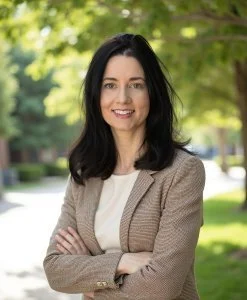
Meet Dr. K
Dr. Cheryl Koelling, known as Dr. K, is a practitioner specializing in women’s health, hormones, and metabolism. She is the founder of Kee Health and Strong & Steady Her and is dedicated to helping women build strength, resilience, and long-term wellness through an integrated approach to care.
